

Have you ever felt like a detective, trying to piece together the puzzle of your fatigue, weight gain and gut issues? Before we dive into the connection between SIBO, hypothyroidism and weight gain, I have some interesting statistics for you. It has been reported that 54% of people with hypothyroidism and 67% people with IBS have SIBO! It is estimated that an even larger majority of population with various health symptoms have SIBO without even realising it or having been properly diagnosed as sometimes symptoms may not be that obvious! In this article I want to emphasise how important is gut not only for healing hypothyroidism and improving weight loss but also for overall health and wellbeing!
What is SIBO?
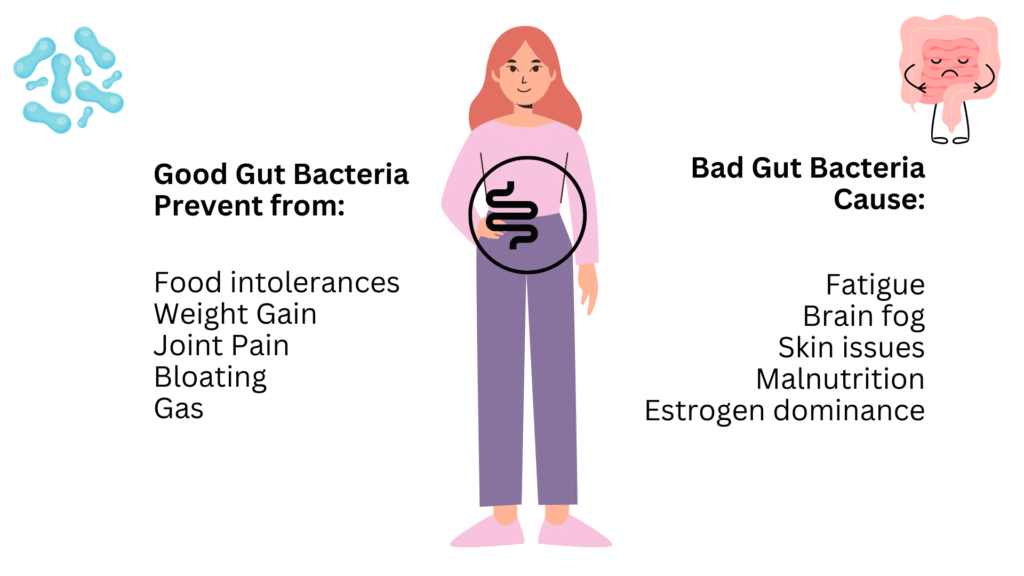
You’ve probably heard that gut health is crucial and that many health issues originate in the gut! In a healthy gut, the majority of our gut bacteria should reside in the large intestine. However, when gut bacteria begin to grow in the small intestine, it can lead to a condition called SIBO (Small Intestinal Bacterial Overgrowth). SIBO can cause a variety of other health symptoms and issues, ranging from bloating, fatigue, and weight gain to skin problems and even anxiety!
You might be wondering, how does the bacteria start growing in the wrong place?
Let me explain.
In a healthy digestion process, the food travels from our mouth to stomach, where it gets broken down into smaller particles, then travels to the small intestine. This is where the magic happens – most nutrients from your food are absorbed here (so yes that’s why SIBO is also linked with so much more than bloating only). After this, the food moves to the large intestine and then finally it’s excreted in your daily bowel movements.
What Causes SIBO?
There are many causes and risk factors of SIBO but three main ones are:
- Poor digestion and low stomach acid,
- Stress and…
- Under active thyroid. Hypothyroidism slows down everything in your system including how well your body digest and moves the food through your digestive track.
Other common causes of SIBO include:
- Low digestive enzyme production
- Poor bile flow
- Gut inflammation and other gut related conditions like Crohn’s Disease, IBS, ulcerative colitis and diverticulitis
- Poor vagus nerve function (which again comes to stress amongst others), intestinal neuropathy, or damage to nerves and muscles in the gut.
- Certain medications such as opioids and proton pump inhibitors for heartburn
- Certain conditions like certain medications such as opioids and proton pump inhibitors
- Antibiotics and poor immune system

Symptoms of SIBO
From the very common and obvious ones like bloating, gas, sometimes constipation to less obvious ones like fatigue (because of poor vitamin B12 absorption), brain fog, acid reflux, food sensitives and…weight gain!
Since SIBO is linked with poor nutrients absorption. If left untreated for months or years it can lead to multiple vitamin and minerals deficiencies and related symptoms:
- Signs of vitamin B12 deficiency – fatigue, nerve issues such as numbness or tingling, depression, poor memory, megaloblastic anemia
- Signs of Vitamin A deficiency – night blindness, low immune system
- Signs of Vitamin D deficiency – frequent colds, poor bone health, weight gain, hormonal imbalances.
- Signs of Vitamin E deficiency – muscle weakness, dry skin, poor immunity
- Signs of Iron deficiency – fatigue, shortness of breath, pale skin
Other symptoms:
- Mental wellbeing – anxiety, depression
- Skin – acne, rosacea, eczema, psoriasis, dermatitis
- Other – joint pain, sugar and carbohydrate cravings
- Chronic illness – fibromyalgia, chronic fatigue syndrome, Hashimoto’s
SIBO and Weight Gain Connection:
One lesser-known aspect of SIBO is weight gain. On one had, SIBO can lead to weight gain but also excess weight can make SIBO worse. Here is the thing. Gut microbiome is extremely important if it comes to how our bodies metabolise food, extract and store calories, regulate appetite and also burn fat for energy! For instance, an imbalance in the gut microbiome can lead to increased absorption of calories, altered fat storage, and even changes in hormone production that regulate hunger and satiety.
Additionally, the gut microbiota can impact inflammation and insulin sensitivity, both of which are crucial factors in weight management.
SIBO and Inflammation
Let’s take a closer look on inflammation.
The presence of SIBO leads to compromised gut wall and leaky gut overtime. As a result, it increases inflammation within the intestinal lining. Such inflammation not only contributes to food sensitivities and poor thyroid hormone conversion, which in turn means a slower metabolism, but it can also disrupt hormonal balance, leading to hormonal weight gain.
Research shows that treating SIBO will not only help you with weight loss but range of other symptoms and health issues.
That means that by treating SIBO you can not only lose weight more effectively but also improve your thyroid and enjoy more variety of foods without troublesome side effects!
SIBO and Insulin Resistance
Insulin resistance is another weight gain causing hormonal imbalance. Studies show that SIBO may also contribute to insulin resistance. Insulin resistance occurs when the body cannot properly respond to insulin signaling, which leads to higher blood sugar levels.
When there is too much glucose in the blood that can’t enter the cell to be burnt for energy, it will be stored as fat.
SIBO and Nutrient Absorption
One of the biggest challenges with SIBO is poor nutrient absorption. Back when I was trying to heal my underactive thyroid naturally, I underwent numerous nutritional tests and was surprised to find that I was deficient in many nutrients! I couldn’t understand why my amino acid levels were so low despite consuming meat, fish, eggs, and other protein-rich foods. Furthermore, many of my vitamin and mineral levels were borderline low!
Then, I have done SIBO test which turned out to be positive and when I addressed SIBO, not only my thyroid markers improved but also my acne started to clear out! It was just another important piece in the whole hypothyroidism puzzle!
The important thing is that with adequate nutrient intake and absorption, our body is way more efficient at hundredths of process that are essential to maintain optimal health and wellbeing. Vitamins and minerals are cofactors involved in digestion, metabolism, detoxification, thyroid hormone production and much more!
Can Hypothyroidism cause SIBO?
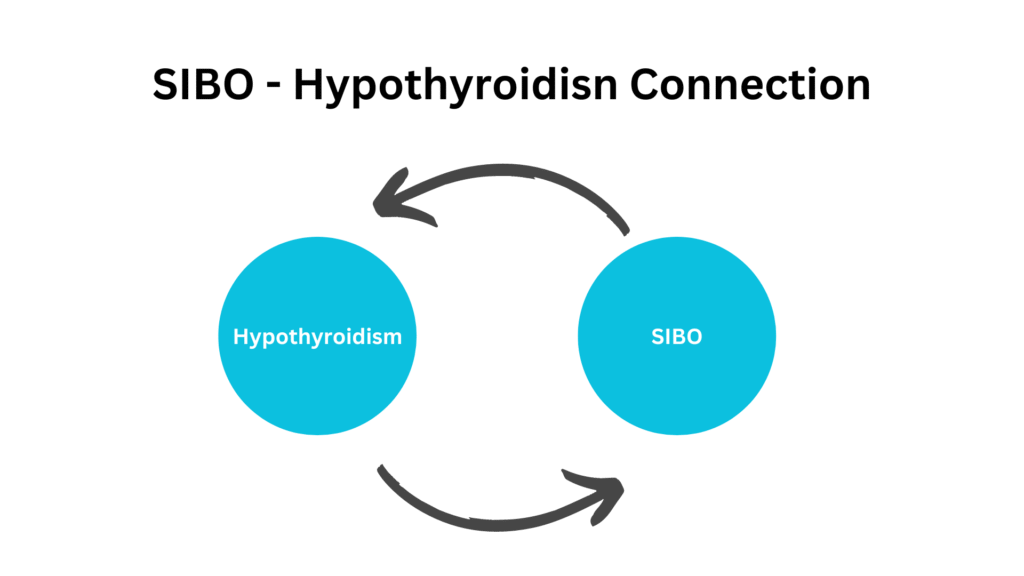
SIBO is very prevalent with hypothyroidism. Underactive thyroid slows down metabolic processes including stomach acid production and digestion. This slowdown contributes to an overgrowth of harmful bacteria in the gut and also to the growth of gut bacteria in the wrong place (small intestine). Reduced stomach acid levels facilitate bacterial overgrowth and also increases risk of gut infection.
With SIBO and gut inflammation (because of bad bacteria overgrowth and excess toxins from poor digestion), T4 to T3 thyroid hormone conversion is compromised.
Approximately 20% of T4 (inactive thyrod hormone) is converted to T3 (active thyroid hormone) in the digestive tract.
Active T3 is the thyroid hormone that we ultimately need for healthy metabolism and also weight loss!
You can see that slow thyroid can lead to SIBO but then SIBO impairs further thyroid function and absorption of essential nutrients needed for healthy thyroid and metabolism!
Traditional Medicine vs. Functional Medicine Approach to SIBO
In traditional medicine, the approach to SIBO often involves antibiotics. It can be effective but might not address the underlying issue and if the root cause is not treated SIBO will keep reoccurring.
It’s quite common for people who have tried antibiotics to experience significant improvements for a short period, but then find that SIBO and its related symptoms recur.
On the other hand, functional medicine seeks to understand the root cause. That means, taking a closer look at what caused SIBO in the first place and how this can be addressed with dietary changes, appropriate probiotics (as not all of them are indicated in SIBO) and treatment of underlying conditions like hypothyroidism amongst others.
It’s about bringing balance back to your body, not just quashing the symptoms.
Diagnosing SIBO – what is the best SIBO test?
Diagnosing SIBO is actually quite simple and the test can be done even from home! SIBO breath test is considered as a gold standard, which measures the gases produced by bacteria in your small intestine. This test is non-invasive and can be a starting point for effective treatment. As before taking any steps to treat SIBO it’s important to understand what type of SIBO we are facing – is it hydrogen dominant, methane dominant or both!
From SIBO breath tests, glucose breath tests is more accurate than lactulose breath tests however if you have diabetes or other glucose intolerance conditions, lactulose breath test may be more appropriate.
Alternatively organic acid test from urine can also help to detect SIBO.
Next…
Since SIBO is so prevalent and also closely linked with thyroid, in the next post I will share some useful tips how to treat SIBO naturally 🙂
One thought on “Does SIBO Cause Hypothyroidism & Weight Gain?”